




Foton Tunland Ambulance Batch Delivery Highlights China’s Expanding Medical Vehicle Production Capability
 By System Admin
3 months ago
By System Admin
3 months ago
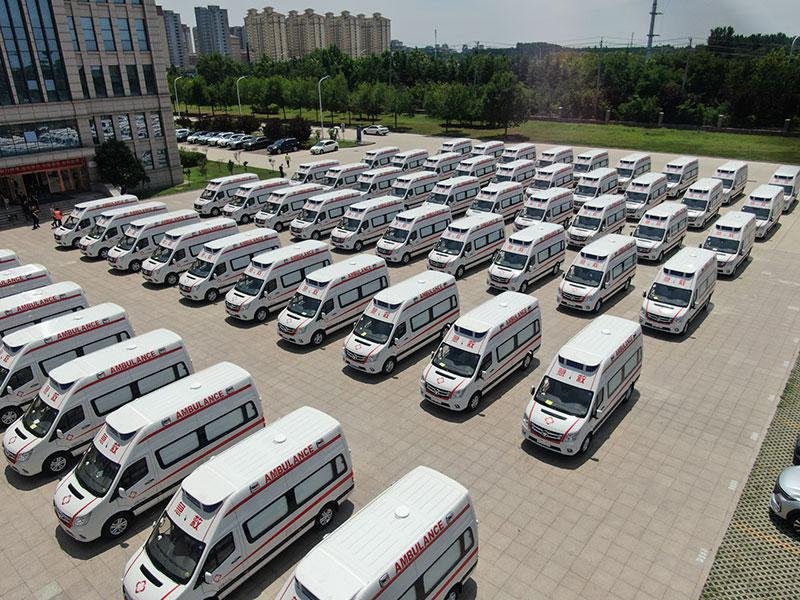
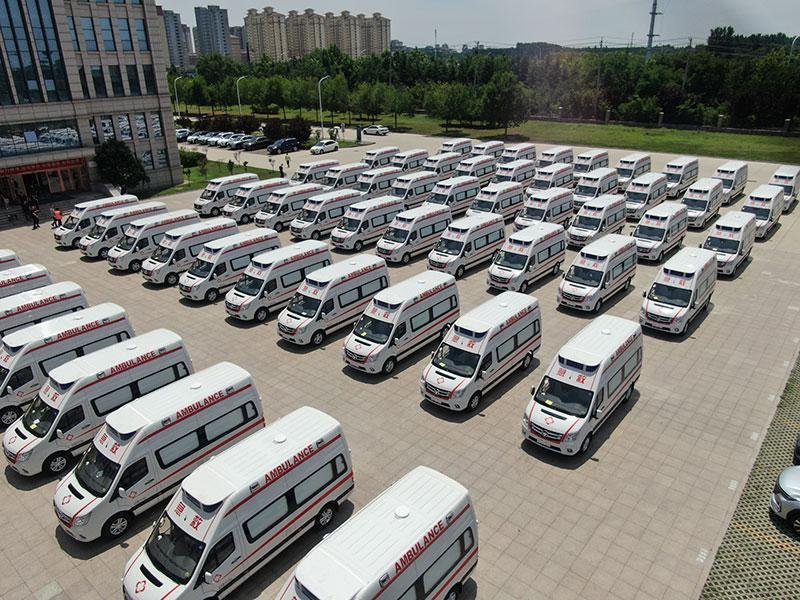
A Weifang-based multi-purpose vehicle manufacturing facility has completed the final preparation of a batch of Foton Tunland ambulances and handed them over to end users. The vehicles are now heading to medical emergency frontlines across multiple regions, where they will strengthen pre-hospital emergency response, primary care transport, and public health emergency readiness. For international dealers, fleet operators, and sourcing teams, the delivery offers a useful snapshot of how Chinese specialty vehicle manufacturers are scaling standardized ambulance production for both domestic and export-oriented buyers.
The Foton Tunland Platform as a Standardized Ambulance Base
The ambulances are built on the Foton Tunland chassis, which has become one of the more common base platforms for medical specialty vehicles produced in China. The Weifang facility operates as part of Foton’s specialty vehicle manufacturing network and is positioned as a core production base for medical-purpose vehicles. Manufacturing follows a digitalized process covering chassis welding, suspension tuning, and the conversion of the rear medical compartment, with full digital traceability from body-in-white to final inspection. For international buyers, this type of integrated production and conversion line is relevant because it reduces the number of separate suppliers involved in delivering a finished ambulance.
The vehicles delivered are described as a standardized option for emergency networks, intended for hospitals, CDCs, and grassroots clinics. The platform has been used previously for negative-pressure ambulances delivered to emergency centers and public health authorities, which suggests an established conversion workflow that can be adapted to different medical configurations.
Chassis and Powertrain Specifications
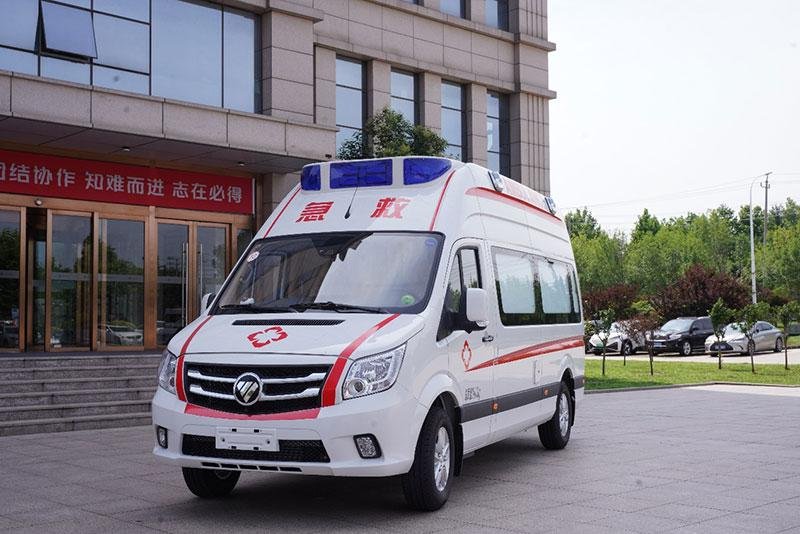
According to the source, the ambulances are equipped with a Cummins 2.8T diesel engine rated at 130 kW maximum power and 360 Nm peak torque, paired with a front-engine, rear-wheel-drive layout and four-wheel disc brakes. The long-wheelbase variant measures 5990 × 2000 × 2585 mm, with a medical compartment offering close to 8 cubic meters of internal space. The manufacturer states that the cabin allows a standing position, supporting the installation and operation of ICU-level equipment such as ventilators, defibrillators, and multi-channel patient monitors.
The body uses a high-strength H-frame anti-collision structure, and the chassis tuning is described as optimized for medical transport to reduce vibration during patient transfer. These details are useful reference points for fleet managers and procurement teams evaluating ride comfort, equipment mounting space, and crash protection when comparing ambulance platforms from different manufacturers.
Practical Considerations for Dealers and Exporters
For international buyers, several factors typically shape the decision to source ambulances from Chinese specialty vehicle producers. The first is compliance with destination-market regulations, including vehicle dimensions, axle load limits, lighting standards, and medical equipment certifications, which are not covered by the source article and must be confirmed directly with the manufacturer. The second is homologation readiness, since long-wheelbase variants exceeding 6 meters in some markets require additional type approval steps.
Dealers and exporters should also clarify configuration options. The source indicates that Foton plans to continue developing both fuel and fully electric powertrain variants, along with customized layouts for monitoring, negative-pressure, and mobile clinic applications. This is relevant for fleets planning a gradual transition to lower-emission vehicles or for markets where electric ambulances are being trialed. Aftersales support, spare parts availability, and warranty coverage for both the chassis and the medical conversion are additional points that sourcing teams commonly negotiate before placing volume orders.
Finally, the use of a widely produced base chassis such as the Tunland can simplify parts sourcing and maintenance training compared with lower-volume specialty platforms. Buyers evaluating multiple Chinese ambulance suppliers may find it useful to compare not only headline specifications but also the depth of the manufacturer’s service network in the target export region.
For a broader view of available commercial vehicles and to connect with verified sellers, browse the current listings on CVTrader vehicles or search the CVTrader dealer directory. Suppliers interested in expanding their international reach can review the requirements on become a dealer.
Featured Vehicles