




Yutong and Huanhua Dairy Complete Long-Distance Cold-Chain Test for Low-Temperature Fresh Milk
 By System Admin
3 months ago
By System Admin
3 months ago
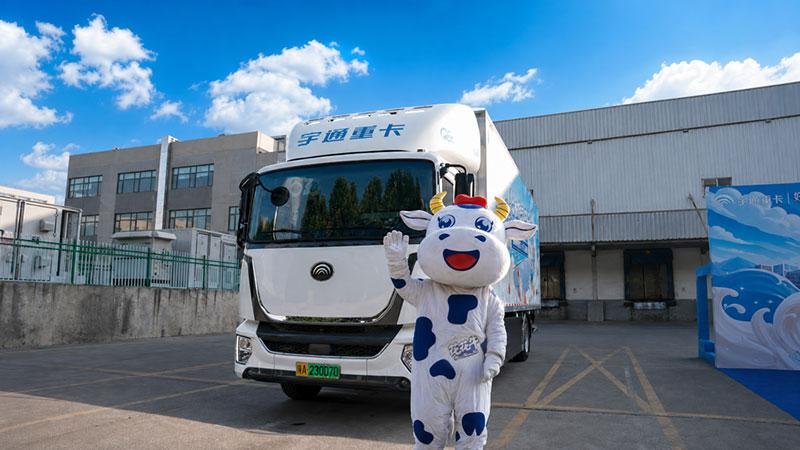
Yutong has partnered with Huanhua Dairy to complete a long-distance cold-chain trial for low-temperature fresh milk, running a fully loaded route from the Huanhua production facility in Mazhai, Zhengzhou to the Wandelong distribution center in Nanyang. The test used a Yutong Tianxing C331 electric refrigerated heavy truck equipped with a hydraulic tail lift, operating as a direct point-to-point run with no intermediate stops or reloading. The route covered a mix of national highways and continuous mountain switchbacks during peak summer heat, closely mirroring standard dairy trunk-line distribution conditions.

Low-temperature fresh milk requires strict handling. The product must be kept within a 2–6°C range to preserve nutritional value, flavor, and shelf life. Any significant deviation during transit can compromise an entire load, directly increasing shrinkage and logistics costs. For fleet operators and dairy distributors, the trial therefore focused on three practical questions: temperature stability over long distances, energy efficiency under continuous refrigeration, and whether a single charge could realistically cover the full journey.
Performance Results from the Zhengzhou–Nanyang Run
According to the data released from the test, the C331 maintained cargo bay temperature within the required 2–6°C range throughout the trip, even during extended uphill climbing and road vibration. The operators reported zero cargo loss and zero deviation in refrigeration setpoint across the full run. On the energy side, the vehicle recorded a combined consumption of 0.69 kWh per kilometer, while the refrigeration unit drew approximately 8 kWh per hour under independent operation, allowing long-duration cooling without significantly raising operating cost.
Range performance was a central focus for fleet planners evaluating electric refrigerated trucks for trunk-line work. Yutong stated that under full load with continuous cooling, the truck completed the Zhengzhou–Nanyang route on a single charge. The company also indicated that under sustained highway driving with cooling set at 3°C, the vehicle can travel up to approximately 400 kilometers before reaching a 15% state of charge. These figures reflect the test conditions and should be considered alongside local climate, load profile, and driving patterns.

The Ruikong E+ Platform Behind the Vehicle
The trial results are tied to Yutong's Ruikong E+ electric drivetrain platform, which the company describes as the technical foundation for the C331. Three elements are highlighted. First, a heavy-duty chassis architecture designed around electric drive, including a direct-drive motor system that removes multi-stage transmission losses and an integrated multi-function high-voltage controller reported to reach up to 99.5% working efficiency. Yutong states this configuration contributes to an overall energy consumption improvement of more than 15% compared with industry benchmarks.
Second, a suite of 17 active safety features functioning as a digital co-driver for long mountain routes. Standard equipment includes AEBS automatic emergency braking, electronic parking brake, hill-start assist, seat-off alert, lane departure warning, and 24-hour battery monitoring. Yutong cites reductions of 30% in rear-end collisions and 40% in blind-spot incidents based on its internal data. Third, the Anruitong cloud management platform, which allows dispatchers to monitor vehicle location, adjust refrigeration setpoints remotely, and review cooling data online. For fleet managers, this addresses a long-standing pain point in cold-chain logistics: the lack of visibility once a truck leaves the yard.
What This Means for Cold-Chain Fleet Operations
For international buyers, dealers, and sourcing teams evaluating electric refrigerated trucks for dairy, pharmaceutical, or other temperature-sensitive freight, the Yutong-Huanhua trial offers a useful reference point. The test was conducted under real commercial conditions rather than laboratory simulation, using a standard 2–6°C dairy specification on a route that included mountain terrain and high ambient temperatures. Fleet operators considering a transition from diesel refrigerated units can compare the reported 0.69 kWh/km figure and the single-charge trunk-line capability against their own route profiles.
It is important to note that published performance figures come from a manufacturer-led test and reflect specific conditions. Independent verification, local climate data, and payload variations will all influence real-world outcomes. Nonetheless, the trial illustrates how electric refrigerated trucks are being positioned for regional long-haul applications, particularly where route distance is predictable and depot charging is available. As Chinese OEMs continue to expand their presence in export markets, comparable testing in other regions will be a key factor for fleet procurement decisions.
Buyers and fleet professionals exploring electric refrigerated trucks, trailer-mounted reefer units, and cold-chain management systems can browse current listings on CVTrader or connect with verified suppliers through our dealer network. Dealers interested in expanding into electric commercial vehicles are invited to learn more about partnership opportunities.
Featured Vehicles