




Golden Dragon and Ebusco Roll Out First 18-Meter Carbon-Fiber Electric Bus, Signaling Deeper European Cooperation
 By System Admin
7 months ago
By System Admin
7 months ago
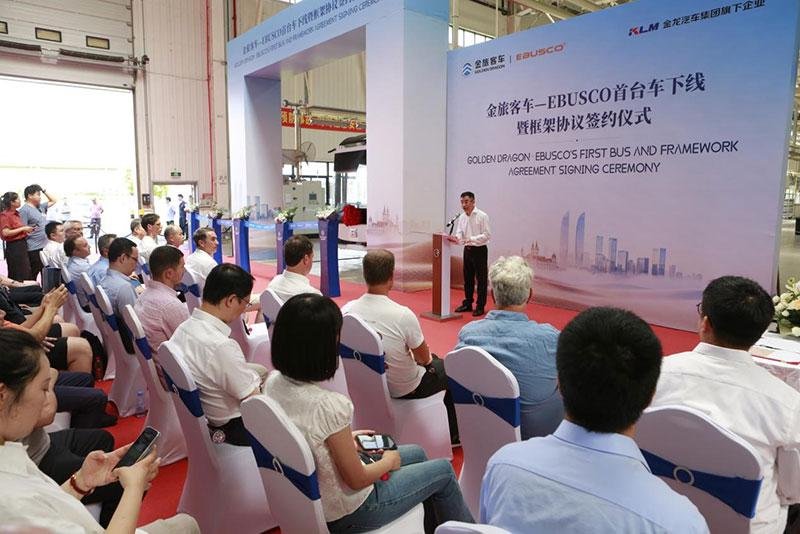
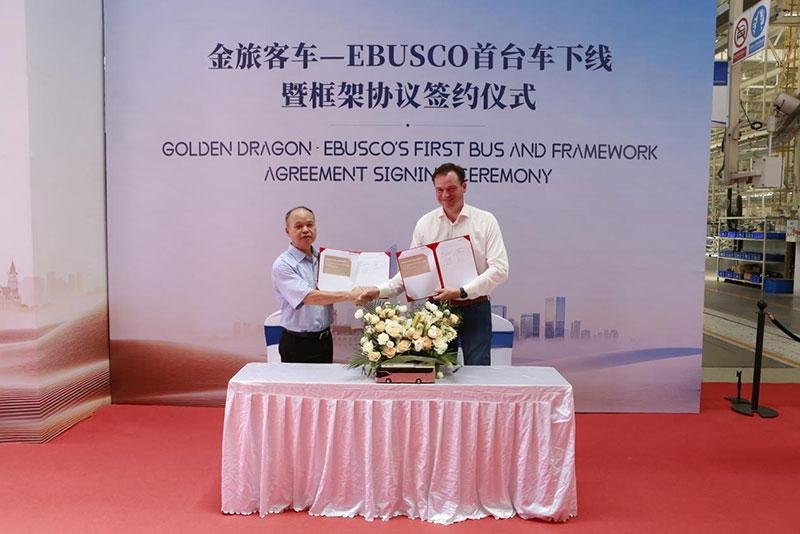
Golden Dragon Bus (Xiamen Golden Dragon Bus Co., Ltd.) and Dutch zero-emission bus manufacturer Ebusco have produced the first 18-meter carbon-fiber bodied electric bus from their joint project at Golden Dragon's Longhai manufacturing facility. The rollout on July 7 was accompanied by the formal signing of a strategic cooperation agreement between the two companies, marking a concrete step in a partnership that dates back more than a decade and that both sides describe as a long-term industrial collaboration rather than a one-off supply deal.
Background of the Cooperation
Ebusco has positioned itself in the European market as a specialist in lightweight electric bus design, battery integration, and energy management for urban public transport. Golden Dragon, founded in 1992, is one of the established Chinese bus builders serving city transit, intercity coach, tourism, and employee shuttle segments, with vehicles exported to more than 150 countries according to the company. The two companies began working together around 2012 on aluminum-body buses and have since moved to carbon-fiber composite structures for this new generation of vehicles.
Golden Dragon's role in the project centers on industrial scale-up and supply chain coordination, drawing on its established network of battery and composite-material suppliers. Ebusco contributes European market knowledge, vehicle architecture experience, and customer-facing specification input. Company statements from both sides frame the collaboration as complementary: Chinese high-end manufacturing capacity combined with European design and operational know-how, with the target end market being premium electric city buses in Europe.
Technical Features of the 18-Meter Bus
The vehicle is an 18-meter class city bus, a length commonly used for high-capacity urban routes and Bus Rapid Transit corridors in many European cities. Its body structure uses carbon-fiber composite material, which the partners highlight for its low weight, corrosion resistance, and mechanical performance. Reducing curb weight is a recurring theme in long-wheelbase electric buses because it directly affects energy consumption per kilometer and therefore operating cost over the vehicle's service life.
The body uses a sandwich-style composite panel construction intended to improve thermal insulation, helping the HVAC system maintain cabin temperature in both hot summers and cold winters. The battery pack is mounted in the floor structure, which lowers the center of gravity, frees interior space for passengers, and supports a fully flat low-floor layout across the passenger area. The bus is also equipped with electronic rear-view mirrors to widen the driver's field of view. Together these features address three priorities common to European public transport tenders: energy efficiency, passenger capacity, and driver ergonomics.
What It Means for International Buyers and Operators
For European transit operators and procurement bodies evaluating Chinese-built electric buses, the project illustrates how a European brand and a Chinese manufacturer can share risk and workload. European OEMs and operators gain access to a proven Chinese production base and a localized supply chain for composites and batteries, while Chinese manufacturers gain clearer insight into European homologation requirements, tender specifications, and aftersales expectations.
For fleet operators and sourcing teams outside Europe, the same model is relevant as a reference point. Carbon-fiber body structures, under-floor battery packaging, and flat-floor layouts are increasingly requested in international tenders for high-capacity electric buses, particularly in the Gulf, Southeast Asia, and Latin America where cities are renewing fleets to meet emissions targets. Buyers comparing quotes should look beyond headline price and assess body material, energy consumption per kilometer, battery thermal management, and the depth of the manufacturer's local service network.
Dealers, exporters, and importers tracking the global bus market should note several practical signals from this announcement. First, Chinese bus OEMs are increasingly co-developing products with European partners rather than simply exporting finished vehicles, which affects warranty structures, spare parts supply, and brand responsibility. Second, composite body technology is moving from demonstration projects into serial production programs, which may gradually influence total cost of ownership comparisons between steel, aluminum, and carbon-fiber platforms. Third, the stated emphasis on long-term service, rather than one-time vehicle delivery, aligns with the procurement language now common in European and Middle Eastern transit tenders.
Golden Dragon has indicated that the cooperation with Ebusco is intended to expand from a single project into ongoing collaboration covering the full product lifecycle, from design and manufacturing through to in-market service support. For the broader electric truck and bus export community, the rollout is another data point in a continuing shift toward joint development models, higher-value materials, and zero-emission public transport as a procurement priority in major cities worldwide.
Explore current listings on CVTrader to compare new and used buses, coaches, and electric trucks, browse verified dealers, or review available inventory on the vehicles page. If you represent a commercial vehicle brand or trading company looking to reach international buyers, learn how to become a dealer on CVTrader.
Featured Vehicles