




JAC New Energy Light Trucks: Four Battery-Swap Models Compared for City Logistics Buyers
 By System Admin
3 months ago
By System Admin
3 months ago
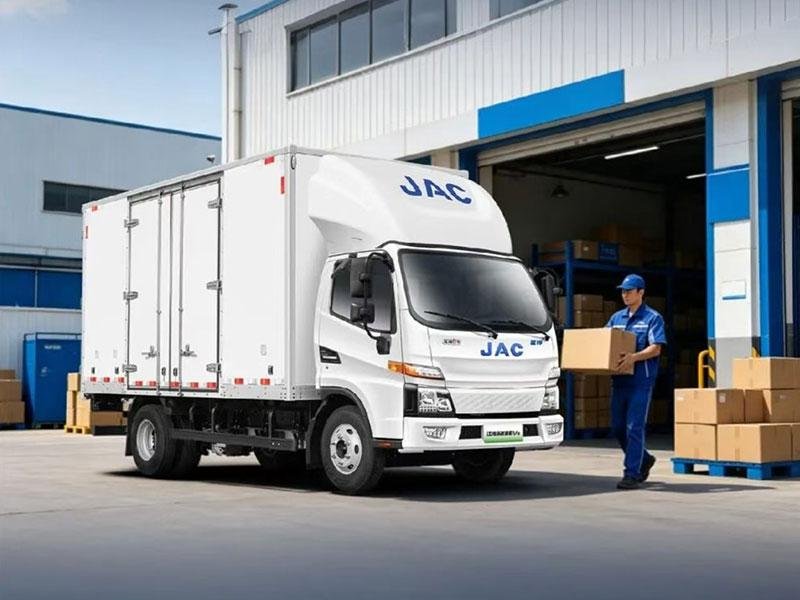
Battery swap is becoming a serious alternative to fast charging for commercial fleets in China. Instead of waiting 30 to 60 minutes for a charge, drivers pull into a swap station and drive out with a fresh battery in about two minutes. For time-sensitive operations such as express delivery, supermarket replenishment, group buying, and fresh food distribution, this changes the economics of running an electric light truck. JAC has expanded its new energy light truck lineup with four battery-swap variants aimed at different logistics scenarios, giving fleet buyers more flexibility when matching vehicles to routes.
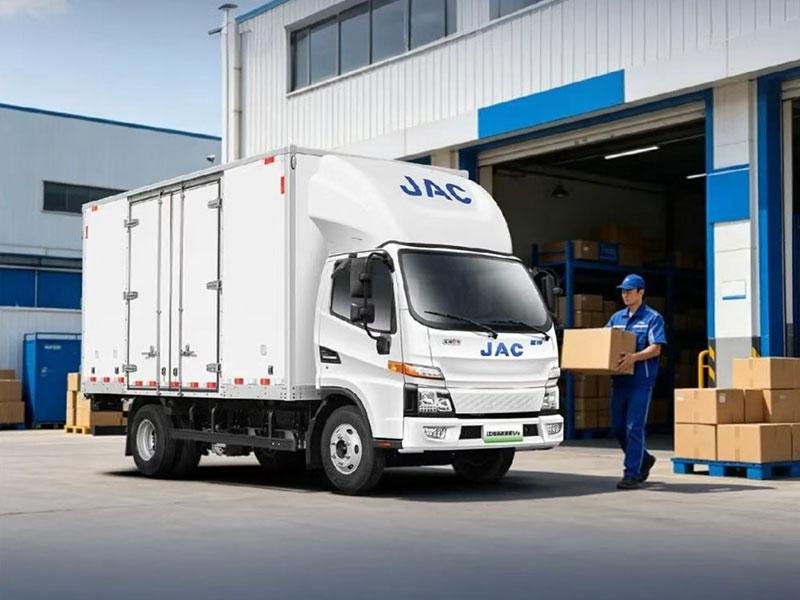
Overview of the JAC battery-swap light truck range
The four models share a common logic: an 81 kWh or 56 kWh battery pack designed for the brand's swap network, a chassis tuned for full-load urban driving, and cabin features taken directly from passenger vehicles to improve driver comfort. The line-up includes the JAC New Energy EV5-81 kWh swap version, the Kaida EX6-81 kWh swap version, the Vanbaolu-56 kWh swap version, and the Kunpeng ET9-81 kWh swap version. Each targets a different operating profile, which is useful information for buyers comparing electric truck options for mixed fleets.
For international sourcing teams, this segmentation is worth paying attention to. Rather than offering one general-purpose electric light truck, JAC is positioning battery-swap vehicles as a portfolio solution. Distributors and fleet operators looking to import commercial vehicles from China can match a model to the actual daily route length, load volume, and stop frequency of the target operation, rather than overspecifying capacity that adds cost and weight.
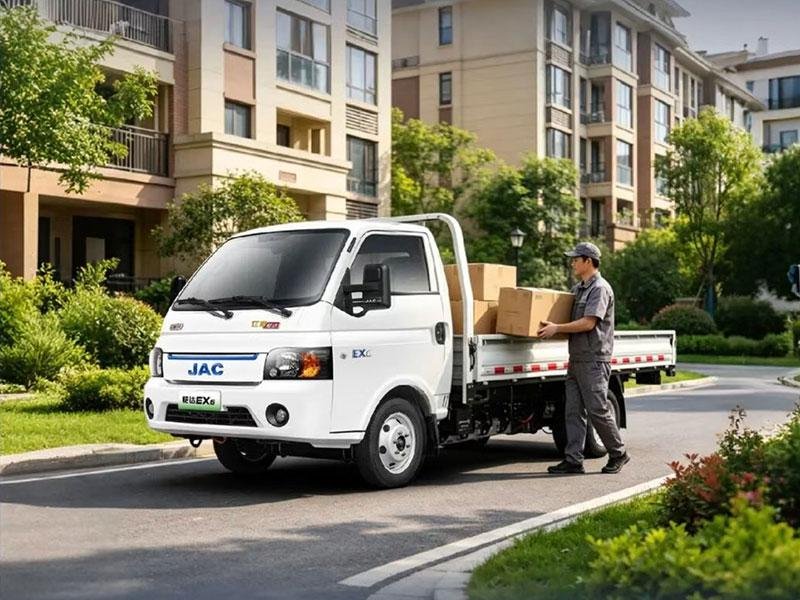
Model-by-model specifications and intended use cases
The JAC New Energy EV5-81 kWh swap version is positioned for express and supermarket fleets where every minute counts. It uses a CATL 81 kWh battery with a quoted combined range of 240 km, paired with a chocolate-style swap module claimed to complete a full swap in roughly two minutes. The body uses Baosteel high-strength steel with a reported 63 percent improvement in structural strength, an 800 mm frame spread, a wide-track rear axle, and an 180 mm frame platform formed by a 6,000-ton hydraulic press. Cabin features include a rotary gear shifter and electric power steering.
The Kaida EX6-81 kWh swap version is aimed at narrower streets, community delivery, and shorter intercity runs where maneuverability matters. JAC quotes a 120-second swap time and a 30 to 50 percent increase in average daily mileage compared with charging-based operations. It is powered by a PetLai permanent magnet synchronous motor with a peak output of 100 kW and 270 N·m of torque. The chassis combines a 3.0-ton rear axle, a 160 mm frame, 195-section tires, and an upgraded EHB hydraulic braking system. A three-seat bench that folds flat into a bed and heated, electrically adjustable mirrors are included as standard features.
The Vanbaolu-56 kWh swap version targets last-mile city logistics where cargo volume matters more than maximum range. Specifications include a 2-minute swap time, a lightweight high-strength body claimed to be 10 percent lighter than comparable structures, and energy consumption quoted at 17 kWh per 100 km. The cargo box is rated at approximately 10 cubic meters, with a quoted 25 percent volume advantage over competing models. The cargo floor sits at 0.6 meters, with side doors of 1.25 meters and rear doors of 1.3 meters for forklift or manual loading. Cabin equipment includes an aviation-style suspension seat, headroom for an average-height driver to stand upright, 14 storage compartments, and a 14.1-inch floating central display.
The Kunpeng ET9-81 kWh swap version is designed for short intercity routes that extend beyond the urban core. JAC quotes an energy efficiency figure of 3.3 km per kWh, a range of more than 240 km at 90 percent state of charge, and the same 120-second swap time. The truck uses a purpose-built electric light truck architecture described as a global first, with a wedge-shaped body achieving a drag coefficient of 0.33 Cd, roughly 30 percent lower than the industry average. The motor is a liquid-cooled flat-wire unit with a peak output of 172 kW and 390 N·m of torque. The cab is 2,170 mm wide with an interior height of 1,850 mm, allowing taller drivers to stand or rest inside.
What fleet buyers and dealers should evaluate
Battery-swap light trucks are only as practical as the swap network behind them. JAC's two-minute swap claim depends on station density in the operating area, and operators outside China will need to confirm whether a compatible network exists locally or whether a private swap station is part of the deployment plan. Total cost of ownership calculations should account for battery leasing versus battery purchase, since swap models often separate the battery from the vehicle in commercial structures.
Beyond the powertrain, several specification details matter for professional buyers. The use of CATL cells, a recognized global battery supplier, supports serviceability and parts availability. Chassis features such as the 6,000-ton pressed frame and high-strength steel body affect crash performance and load capacity, both of which influence insurance and residual value. Cabin features borrowed from passenger vehicles, including rotary shifters, electric power steering, and large infotainment screens, are increasingly expected by drivers and can improve recruitment and retention in tight labor markets.
For dealers and importers, the four-model structure simplifies customer segmentation. A buyer running supermarket replenishment routes is a different sales conversation from one running intercity freight, and each JAC model maps cleanly onto a use case. Exporters should also confirm available configurations, homologation status for the destination market, and after-sales support terms before committing to inventory.
CVTrader lists current new energy and battery-swap light trucks from JAC and other Chinese manufacturers. Browse available models on the vehicles page, connect with verified exporters on the dealers page, or learn how to list your own inventory through become a dealer.
Featured Vehicles