




King Long Buses Take Three Golds at 2026 EC-PAC New Energy Commercial Vehicle Performance Evaluation Event
 By System Admin
7 months ago
By System Admin
7 months ago
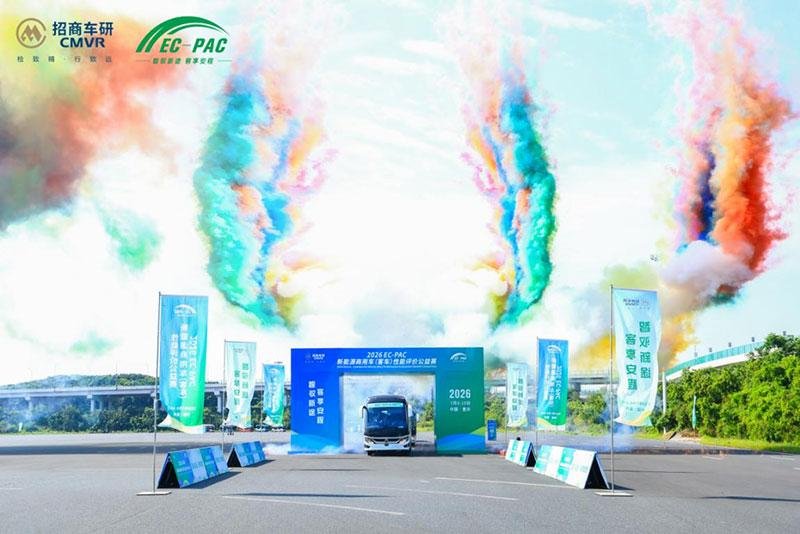
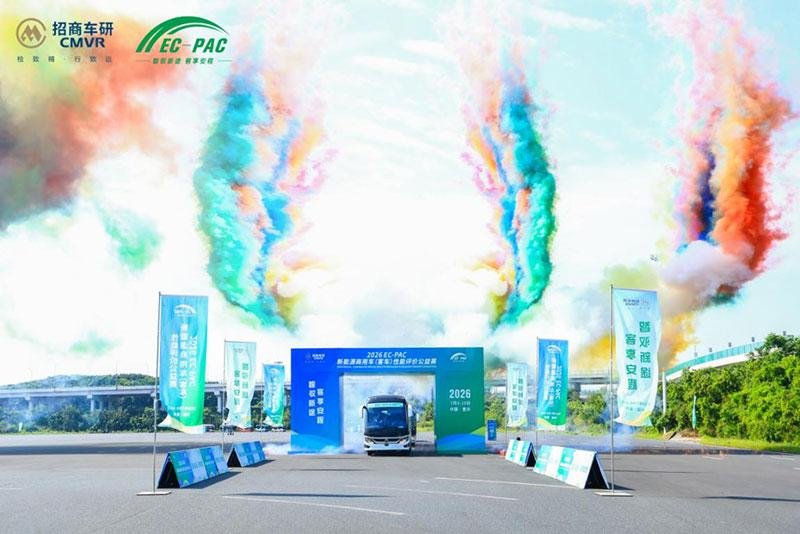
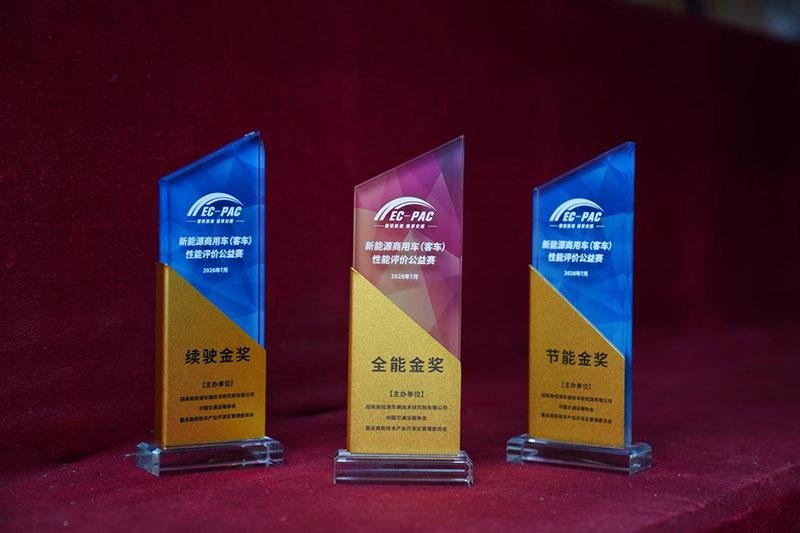
The 2026 EC-PAC National New Energy Commercial Vehicle (Bus) Performance Evaluation concluded in Chongqing, drawing 26 mainstream bus models from 17 domestic manufacturers. Jointly organised by the China Communications and Transportation Association and China Merchants Testing Vehicle Technology Research Institute, the competition is positioned as one of the most rigorous third-party performance tests in the Chinese bus industry. King Long entered two models: a 5.9-metre Qianjing pure-electric mini-loop bus and an 11-metre Qiantu GC11E pure-electric touring coach. Both vehicles returned strong results, with the manufacturer taking three gold-level honours, including the headline Overall Gold Award.
How the Evaluation Works
Rather than ranking vehicles on a single specification, the event assesses each model across seven dimensions: energy efficiency, power, ride and cabin comfort, driving safety, in-cabin health, charging safety, and intelligent driving assistance. Testing is carried out under realistic conditions including loaded urban congestion cycles, high-speed long-distance routes, and extreme temperature environments. The Overall Gold Award is the competition's highest honour and is reserved for the top-ranked vehicle in each class that demonstrates balanced performance across all seven categories, with no single weak area permitted. Only one Overall Gold is issued per class, making the benchmark a recognised reference point for procurement teams in the public transport and coach sectors.
5.9m Qianjing Mini-Loop Electric Bus Results
In the small and mini-bus class, the 5.9-metre Qianjing took the class Overall Gold along with the Energy Efficiency Gold and the Driving Range Gold. The vehicle is built on a widened air-suspension chassis with EBS electronic braking and supports full compatibility fast charging. A short rear overhang and large departure angle give it strong passability on tight urban routes, while a longer wheelbase expands cabin capacity so the 6-metre-class body delivers space closer to a 7-metre vehicle. A lightweight dedicated platform reduces kerb weight by roughly 100 kg versus comparable models. The drivetrain combines a 97 percent efficiency permanent magnet synchronous motor with a six-in-one silicon-carbide controller and an integrated electric drive axle, achieving a claimed 32 percent energy recovery rate. Under the CHTC-B urban bus cycle, at full rated passenger load with air conditioning set to 24 degrees, the vehicle recorded energy consumption more than 4.8 percent below the class average measured during the event.
11m Qiantu GC11E Touring Coach Results
In the 10–12 metre coach class, the Qiantu GC11E claimed the Energy Efficiency Gold and the Driving Range Gold, positioning it as a benchmark model for mid-to-high-end tourism transport and intercity commuting. The body is designed with an aerodynamics package that produces a drag coefficient of 0.365, paired with a closed-ring lightweight body structure to reduce high-speed energy use. King Long highlights rapid power response, low cabin noise at cruising speed, and a standard full L2-level advanced driver assistance system. Across the dynamics, comfort, safety, and intelligent driving categories the coach received high scoring against its class peers.
What the Results Mean for International Buyers and Fleets
Independent performance evaluations are increasingly relevant for overseas buyers, dealers, and fleet operators who need objective reference points beyond manufacturer brochures. The EC-PAC methodology's focus on full-load, real-world driving cycles, and the requirement that the Overall Gold demands balanced scores across seven performance dimensions, offers a more procurement-relevant signal than single-spec comparisons. For sourcing teams evaluating Chinese-built new energy buses for export, tourism, or public transit use, third-party data of this kind can support specification validation, vendor selection, and after-sales performance benchmarking. The 5.9m Qianjing is aimed at last-mile urban, community, and micro-transit routes where manoeuvrability, energy use, and short-radius range matter most. The 11m Qiantu GC11E is positioned for intercity coach and higher-end tourism services where ride comfort, high-speed efficiency, and driver assistance features are key decision factors.
Market Context
China's new energy bus segment continues to move from scale-led adoption toward higher expectations around quality, durability, and total cost of ownership. Fleet buyers are placing greater weight on third-party verification of efficiency, range, and safety claims, particularly as charging infrastructure matures and operating routes become more demanding. For international buyers tracking the export readiness of Chinese electric buses, recognition in domestic performance evaluations, combined with compliance documentation, parts support, and dealer coverage in destination markets, forms the practical basis for purchase decisions.
For buyers looking to explore new energy buses and coaches from verified Chinese manufacturers, browse the latest listings on CVTrader Vehicles. To connect with established suppliers, visit the CVTrader Dealers directory. Exporters and distributors interested in representing new energy bus brands can learn more about partnership options on the Become a Dealer page.
Featured Vehicles