




Chery Commercial Vehicles' Wanda Bus Posts Sharp Export Growth in H1 2026 Amid Domestic Sales Climb
 By System Admin
5 months ago
By System Admin
5 months ago
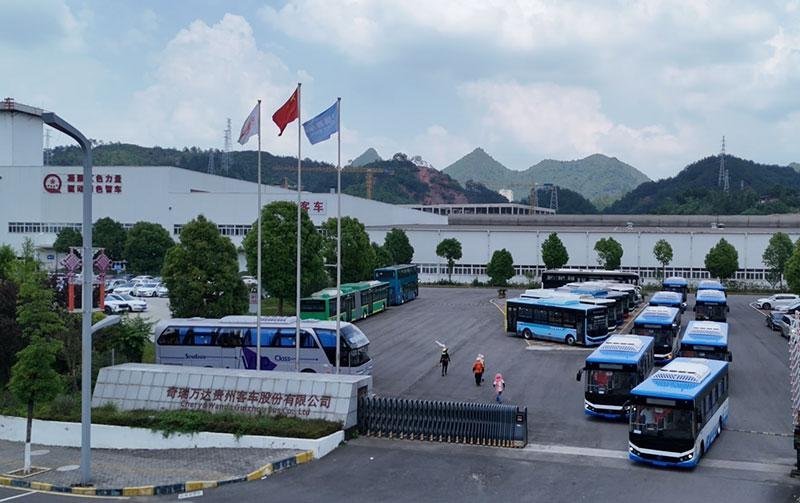
Chery Commercial Vehicles' Wanda Bus brand has recorded notable gains in both overseas exports and domestic sales during the first half of 2026, according to new-energy bus sales rankings published by the China Bus Information Network. The rankings cover two core segments: the domestic market for new-energy buses above 6 meters, and the export market for new-energy buses above 3.5 meters. Against a backdrop of uneven industry performance and intensifying competition, Wanda Bus entered the top ten in several monthly and half-yearly categories, supported by a combination of product range and a structured go-to-market approach.
For international buyers, fleet operators, and sourcing teams, the data highlights how Chinese bus manufacturers are repositioning themselves from vehicle exporters to providers of complete passenger transport solutions. Understanding which brands are scaling, which markets they are targeting, and what product configurations they offer is increasingly relevant for public transport operators, tourism operators, and dealer networks evaluating supply from China.
Export Acceleration Driven by Regional Adaptation
In the June 2026 ranking for new-energy bus exports above 3.5 meters, Wanda Bus reported year-on-year export growth of 1,757.14 percent and month-on-month growth of 71.05 percent, placing it among the fastest-growing exporters in the top ten. For the January to June period, the brand's export growth was reported at more than ten times the industry average growth rate.
The company has focused on matching product specifications to the operating conditions of target markets, including the Middle East, Central Asia, and Southeast Asia. Its export line-up includes battery-electric and hydrogen fuel cell models designed for coach services, city public transport, and resort or scenic-area shuttle operations. Reported factors behind the export momentum include localized service teams, overseas offices, customer-tailored development, and a full after-sales support framework.
Specific delivery activity cited in the rankings includes batch deliveries of commuter buses to Saudi Arabia and shipments to multiple Central Asian countries via land border crossings. The brand has indicated that repeat orders from existing clients and new orders from overseas dealers have been contributing to pipeline growth.
Domestic Sales Climb Outpaces a Slowing Sector
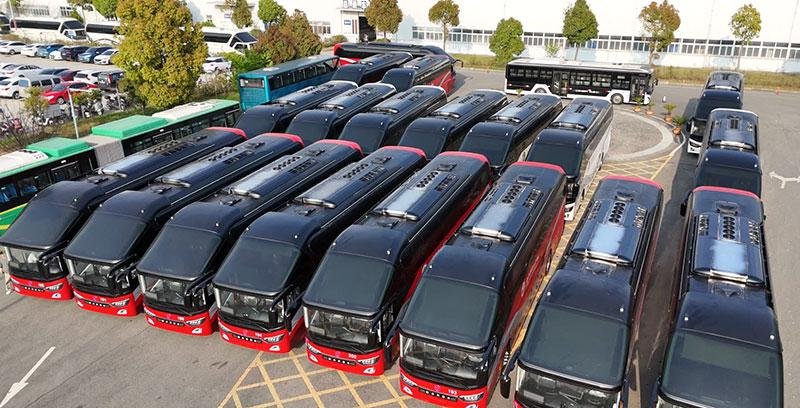
On the domestic side, Wanda Bus recorded year-on-year growth of 89.44 percent in cumulative sales of new-energy buses above 6 meters during the first half of 2026, again placing it in the industry top ten. By comparison, the rankings indicate overall industry growth of just 0.83 percent over the same period, with several mainstream manufacturers reporting declines.
For June 2026 specifically, the brand reported year-on-year domestic growth of 70.43 percent and month-on-month growth of 59.35 percent. Batch deliveries were completed in provinces including Anhui, Sichuan, Guangdong, and Guizhou, supporting public transport fleets, corporate and institutional commuter services, and tourism operators. The product portfolio spans 6 to 12-meter battery-electric city buses, hydrogen fuel cell commuter coaches, and high-end tourist coaches.
While the domestic growth is significant, the more relevant signal for international stakeholders is the structural shift in how the manufacturer is approaching overseas markets. Moving beyond single-vehicle transactions, the brand is positioning itself around full passenger transport solutions, including vehicle specification, service infrastructure, and long-term parts and maintenance support.
What This Means for International Buyers and Dealers
For fleet operators and procurement teams evaluating Chinese bus suppliers, the data points to a manufacturer that is investing in market-specific adaptation rather than offering a uniform export product. The inclusion of hydrogen fuel cell models in the export line-up is worth noting for operators in regions where hydrogen infrastructure or pilot programs are under development, although buyers should independently verify hydrogen model availability, homologation status, and after-sales support in their target country.
For existing and prospective dealers, the reported repeat-order pattern and growing dealer network suggest opportunities in markets where Chinese new-energy buses have historically had limited presence. However, buyers should weigh any sourcing decision against local regulatory requirements, warranty terms, parts availability, and total cost of ownership considerations specific to their operating environment.
Industry rankings provide useful directional signals, but they should be read alongside independent due diligence, including verification of certifications, reference customers in the relevant market, and the supplier's capacity to support long-term service requirements.
Buyers and dealers can browse available bus and coach listings on CVTrader, connect with verified sellers via the dealer directory, or learn how to list inventory through become a dealer.
Featured Vehicles